
Engineering
Shipping Production AI Agents Without the Demo Hangover
A practical engineering view of taking agents from prompt playgrounds into systems that hold up under real users, messy data, and on-call reality.
Syed Fahad Abbas
September 26, 2026·8 min read
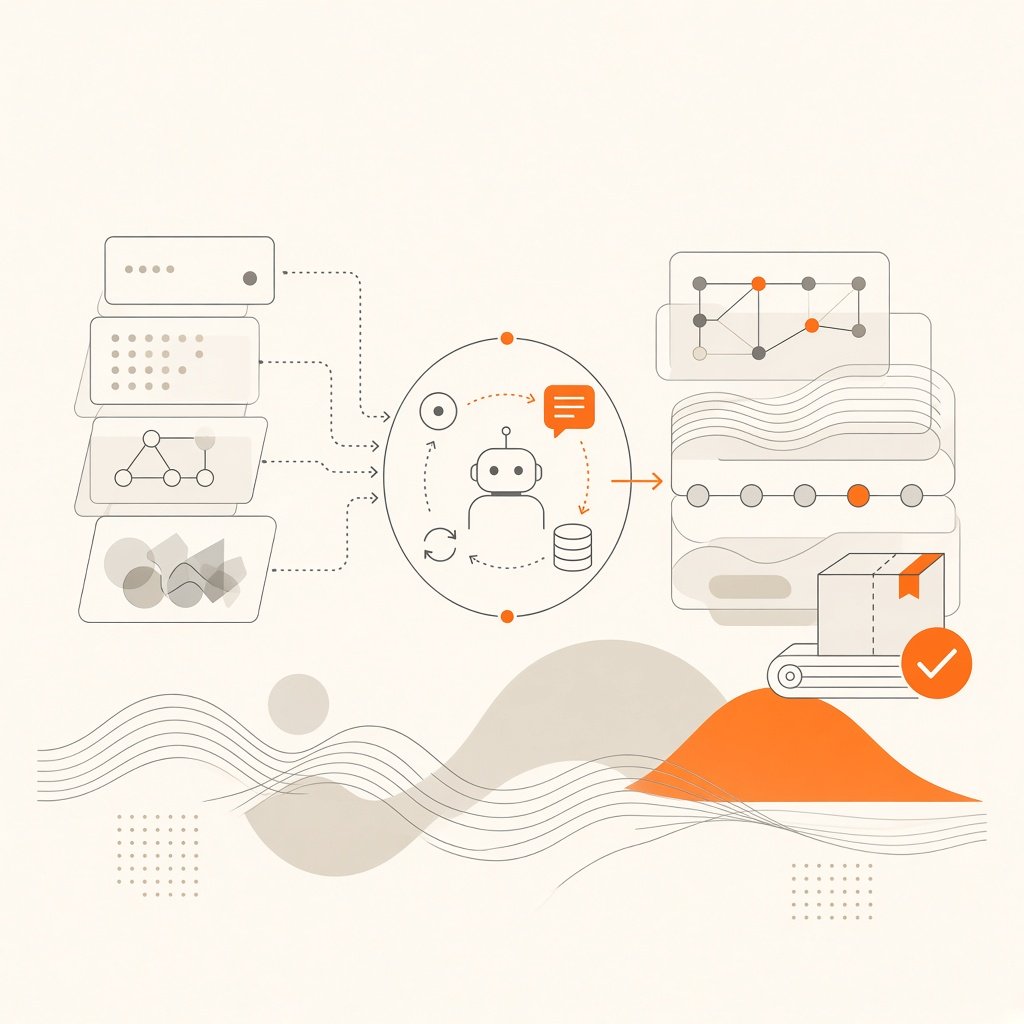
Demos optimize for surprise. Production optimizes for trust.
A good demo makes people lean forward. A good production agent makes people stop checking whether they can trust it. Those are different design problems. In a demo, one clever trajectory is enough. In production, the long tail of weird inputs is the job.
If your agent only works when the prompt is hand-tuned and the data is clean, you do not have a product capability yet. You have a stage trick.
Narrow the agency before you widen the model
Start with a constrained job: classify and route, draft and wait for approval, extract structured fields, propose the next step from known tools. Give the agent a small tool surface and clear success criteria before you give it freedom.
Wider models do not fix vague objectives. Explicit state, typed tool contracts, and human checkpoints do. Autonomy should be earned by reliability, not granted because the architecture diagram looked impressive.
Build the boring layer first
Production agents need the same boring layer every serious system needs: tracing, retries, idempotency, secrets handling, rate limits, and a place to inspect what the model saw and did. Without that, every failure becomes folklore instead of an engineering ticket.
Evals belong in that layer too. Keep a living set of real examples — happy paths, adversarial ones, and the ugly tickets from last month. If you cannot say what “better” means this week, you will only notice regressions when customers do.
Design for failure in public
Agents will be wrong. The product question is whether wrong is recoverable. Prefer actions that are reversible, drafts over silent writes, and explanations that point to sources or intermediate steps.
When something fails, the UI should say what happened in operator language: missing permission, tool timeout, low confidence, conflicting records. Hiding uncertainty behind a confident paragraph is how teams lose the right to automate the next workflow.
A simple bar for “ready to ship”
Before we call an agent production-ready at BXTrack, we want three things: a measured baseline on a real workflow, guardrails for the risky steps, and an owner who can read traces when it breaks at 2 a.m.
That bar is intentionally unromantic. Useful AI is not the cleverest agent in the room. It is the one your team can operate, improve, and trust enough to put next to money, customers, and deadlines.
Written by
Syed Fahad Abbas
AI Engineer, BXTrack
Syed Fahad Abbas is an AI Engineer at BXTrack. He designs and ships agentic systems that sit inside real business workflows — with evaluation, guardrails, and the boring reliability work that makes demos survive contact with production.