
AI SaaS
AI Inside Your SaaS: Build Product Loops, Not Side Projects
How SaaS teams should put AI into the product itself — workflow by workflow — so customers feel leverage instead of another chatbot tab.
Muhammad Usman
October 3, 2026·7 min read
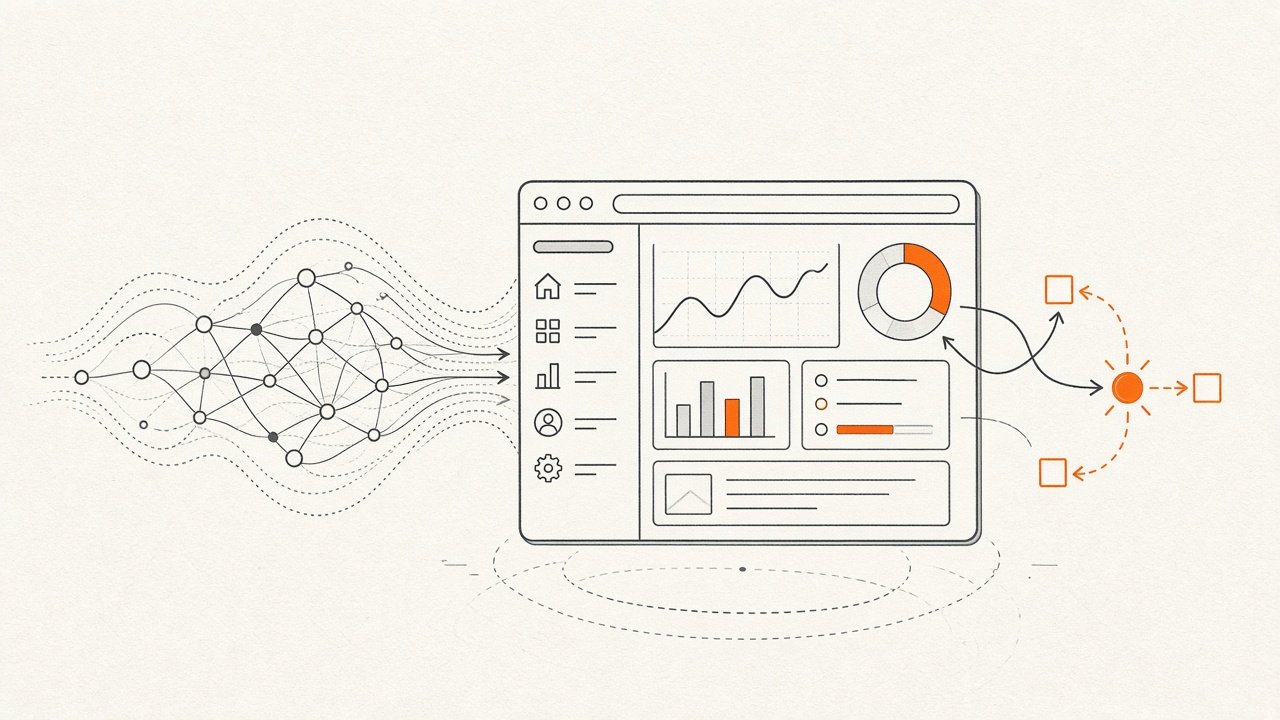
The side-project trap
Most SaaS companies do not fail at AI because the models are weak. They fail because AI gets treated like a side quest: a support bot bolted onto help docs, a one-off summarizer in a back-office script, a slide deck about “AI-first” that never touches the product roadmap.
Customers do not buy your model. They buy a job getting done faster, cleaner, and with fewer handoffs. If AI lives beside the product instead of inside the loop that creates value, it stays optional — and optional tools do not change retention.
Start where the product already has friction
The useful first AI surface is almost never “chat with our app.” It is the step users already hate: configuring a workflow, classifying messy inputs, drafting the next action, reconciling exceptions, or turning activity into decisions.
Map the product loop first. Where do users stall? Where does your team still do manual cleanup after signup? Where does data enter once and get retyped three times? AI earns its place when it shortens a loop you already own.
Ship one complete loop before you scale features
A complete loop means the AI reads the same context the product already has, proposes or executes a useful step, and leaves a trail a human can trust. That usually includes permissions, auditability, fallbacks, and a clear “accept / edit / reject” path.
SaaS teams that win here resist feature sprawl. They pick one high-frequency workflow, instrument it, and improve the model and product UX together until the metric moves — activation, time-to-value, support load, or expansion. Then they reuse the plumbing.
Treat AI as product infrastructure
Prompts, retrieval, evals, and cost controls are not research hobbies. They are product infrastructure. The same way you would not ship billing without observability, you should not ship AI without evaluation sets, latency budgets, and a plan for bad answers.
This is also where go-to-market and engineering have to stay aligned. If sales promises “autonomous agents” while product ships a thin wrapper, trust breaks twice — once with the customer, once inside the team.
What BXTrack looks for with SaaS partners
When we help SaaS companies add AI, we start with the operating and product reality: which workflows already produce data, which decisions are high volume, and which outcomes the business can measure in weeks — not quarters of vague experimentation.
The goal is not more AI surface area. The goal is one product loop that feels calmer and faster because intelligence is embedded where the work actually happens. Everything else is a demo waiting to be abandoned.
Written by
Muhammad Usman
COO, BXTrack
Muhammad Usman is COO at BXTrack, where he helps product and operations leaders turn AI and software into durable business systems — not demos that stall after the pilot.